How To Make Hollandaise Sauce Recipe
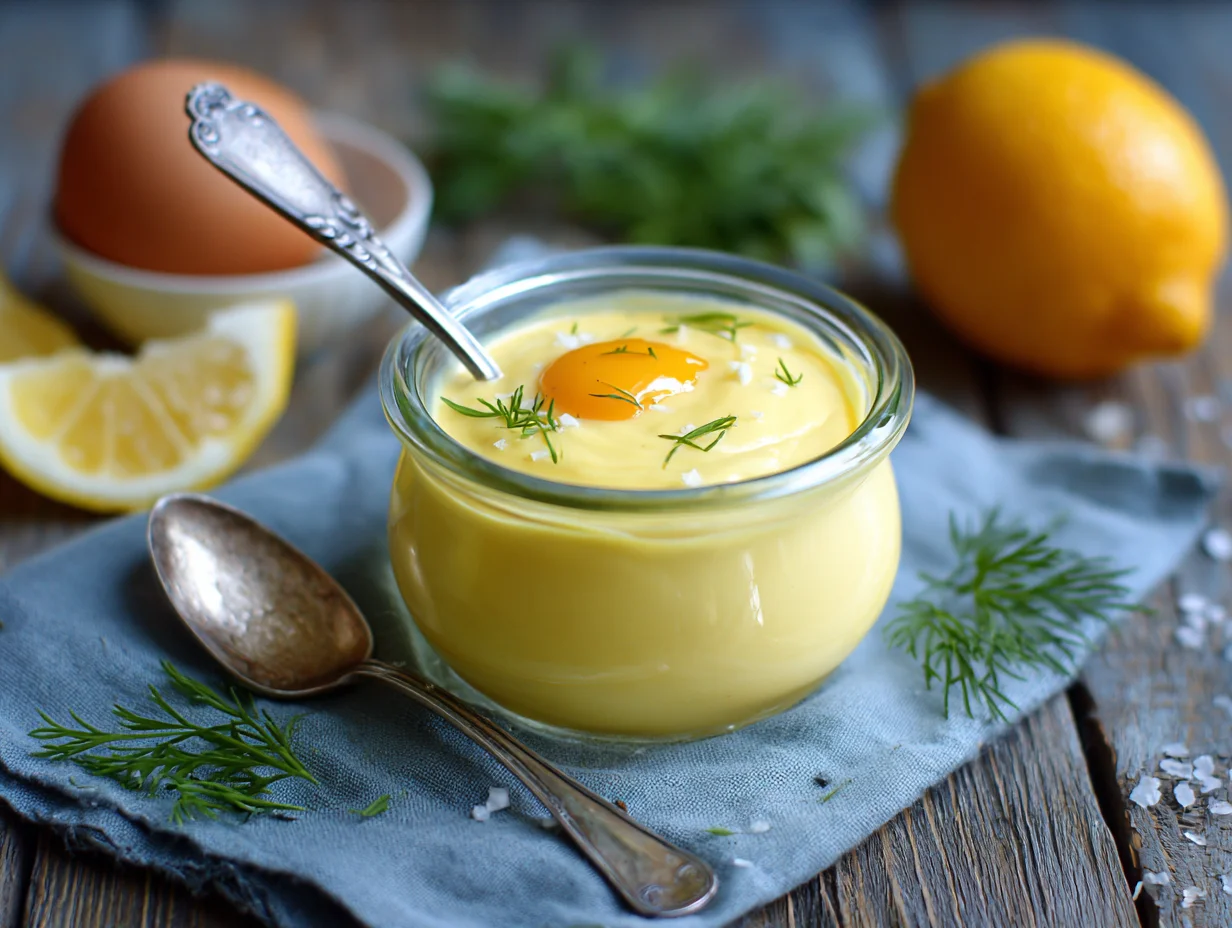
Mastering Hollandaise sauce is a rite of passage for any serious cook. This classic French emulsion is prized for its silky texture, delicate acidity, and luxurious buttery finish. When done correctly, it transforms simple ingredients into something elegant and restaurant-worthy. Hollandaise is best known as the finishing touch for dishes like eggs Benedict, but its versatility goes far beyond brunch.
At its core, Hollandaise sauce is a delicate balance of egg yolks, butter, and acid. These three ingredients must come together in perfect harmony to create a smooth, glossy sauce that coats food beautifully. The process may seem intimidating at first, but once you understand the technique, it becomes surprisingly simple.
Many chefs consider Hollandaise a “mother sauce” because it forms the base for many variations used in professional kitchens. Its rich flavor pairs beautifully with vegetables, seafood, and eggs, making it one of the most versatile sauces you can learn to prepare at home.
In this guide, I’ll walk you through a precise, chef-tested method that delivers consistent, restaurant-quality results with minimal ingredients and careful attention to temperature.
Chef Secrets for Perfect Hollandaise
Professional chefs often rely on one simple principle when making Hollandaise: temperature control. The eggs must warm slowly while whisking to create a stable emulsion. If the heat becomes too intense, the yolks will cook too quickly and scramble.
Another chef technique is adding butter gradually at the beginning. Starting with just a few drops allows the egg yolks to absorb the fat slowly, which strengthens the emulsion and prevents the sauce from separating.
Finally, chefs always taste the sauce before serving. A perfect Hollandaise has a balanced flavor that is buttery, slightly tangy, and lightly seasoned.
You may also like: Marinara Sauce Recipe with Fresh Tomatoes
Pro Tips for Restaurant-Quality Hollandaise
For the smoothest Hollandaise sauce, use fresh eggs and high-quality butter. Since the sauce contains very few ingredients, the quality of each one directly affects the final flavor.
Another professional tip is using a wide whisking bowl. This gives you more space to whisk efficiently and incorporate butter evenly into the sauce.
If your sauce becomes too thick, whisk in a teaspoon of warm water to loosen it without breaking the emulsion.
Ingredients List
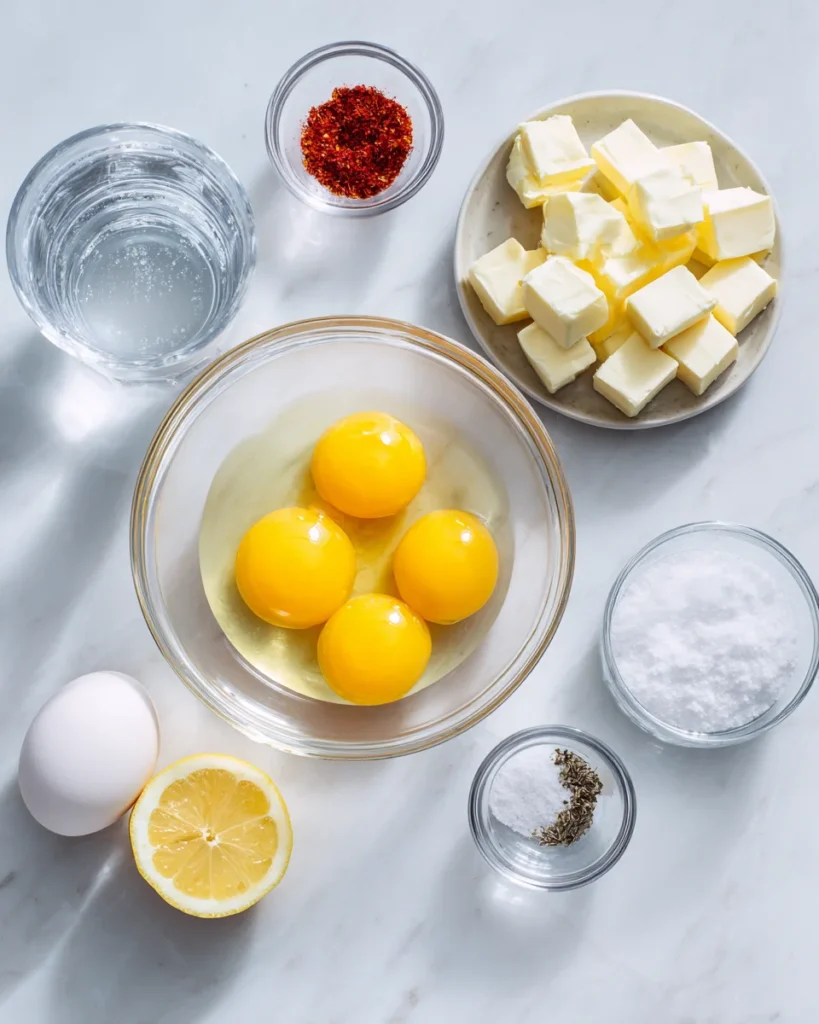
- Egg yolks (fresh, large)
- Unsalted butter
- Fresh lemon juice
- Cold water
- Fine sea salt
- White pepper or cayenne pepper (optional)
Step-by-Step Instructions
Prepare the Butter
Gently melt the butter over low heat until it becomes fully liquid. Keep it warm but not hot, as extremely hot butter can break the sauce. Clarified butter is traditionally used in restaurants, but warm whole butter works perfectly well for home cooking.
Build the Egg Base
In a heatproof bowl, whisk together the egg yolks, cold water, and lemon juice. Continue whisking until the mixture becomes pale and slightly thickened. This step begins the emulsification process and helps stabilize the sauce.
Cook the Yolks Gently
Place the bowl over a saucepan of barely simmering water to create a double boiler. Whisk continuously until the yolk mixture thickens and forms soft ribbons when lifted from the whisk. This step requires patience—too much heat can scramble the eggs.
Emulsify with Butter
Remove the bowl from heat. Slowly drizzle the warm butter into the egg mixture while whisking constantly. Start with just a few drops, allowing the emulsion to form before adding more butter in a steady stream.
Season and Adjust
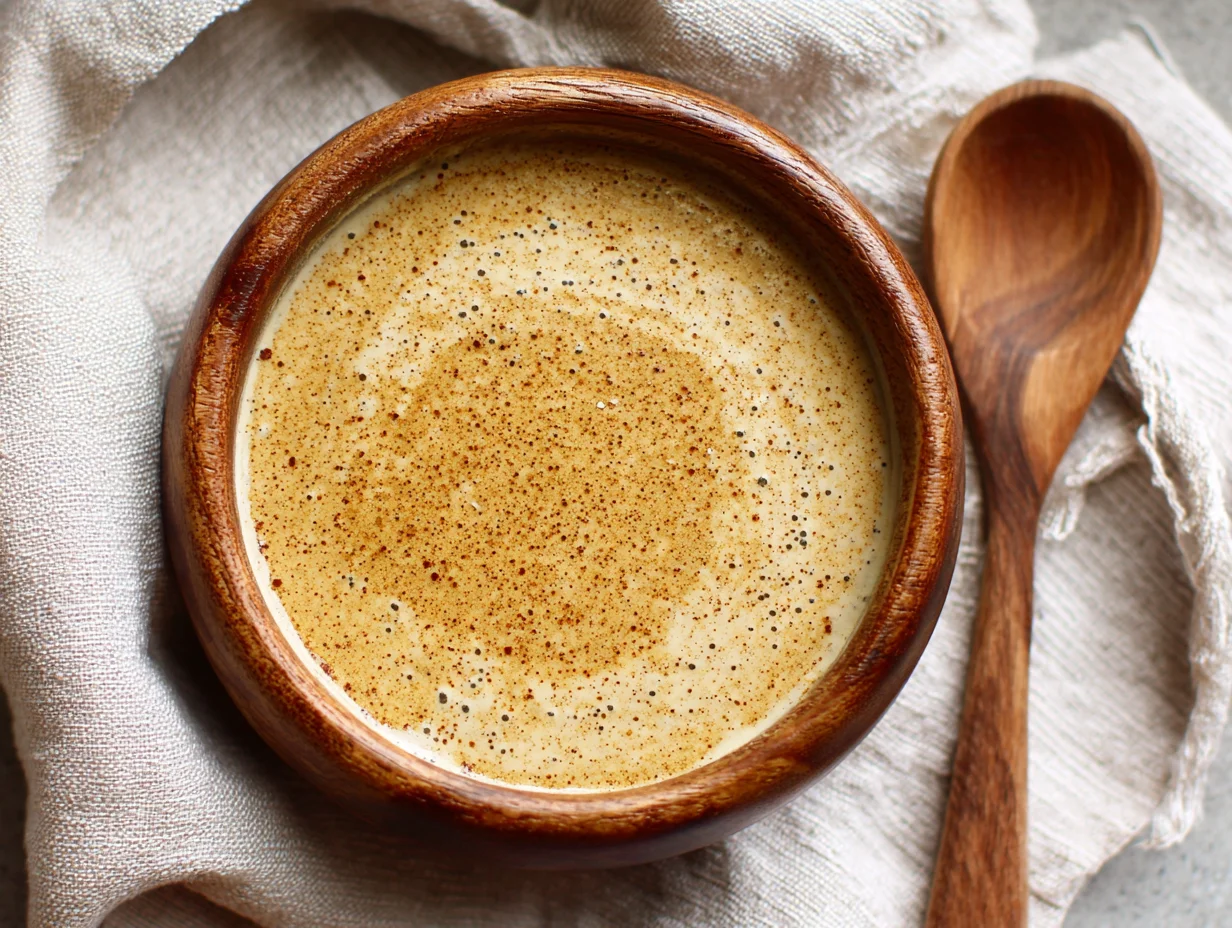
Season the sauce with salt and a pinch of white pepper or cayenne. If the sauce becomes too thick, add a few drops of warm water or lemon juice to adjust the consistency. A perfect Hollandaise sauce should be smooth, glossy, and pourable.
Common Mistakes to Avoid
One of the biggest mistakes when making Hollandaise sauce is using butter that is too hot. Extremely hot butter can break the emulsion and cause the sauce to separate.
Another common issue is cooking the egg yolks too quickly. High heat will scramble the eggs instead of thickening them. Always cook the yolks gently over simmering water while whisking continuously.
Lastly, many beginners add butter too quickly. Pouring butter in a slow, steady stream ensures the sauce emulsifies properly.
Cook Time
Total: 10 minutes
Prep: 5 minutes
Bake: 5 minutes
Servings
Makes approximately 1 cup (about 4 servings)
Nutritional Information (approx. per serving)
- Calories: 180
- Fat: 18 g
- Saturated Fat: 11 g
- Cholesterol: 115 mg
- Protein: 2 g
- Carbohydrates: 1 g
- Sodium: 120 mg
Storage Instructions
Hollandaise sauce is best served immediately after preparation. If needed, it can be kept warm for up to one hour by placing the sauce in a thermos or warm water bath. Avoid refrigerating and reheating the sauce, as the emulsion may separate and lose its smooth texture.
Suggestions
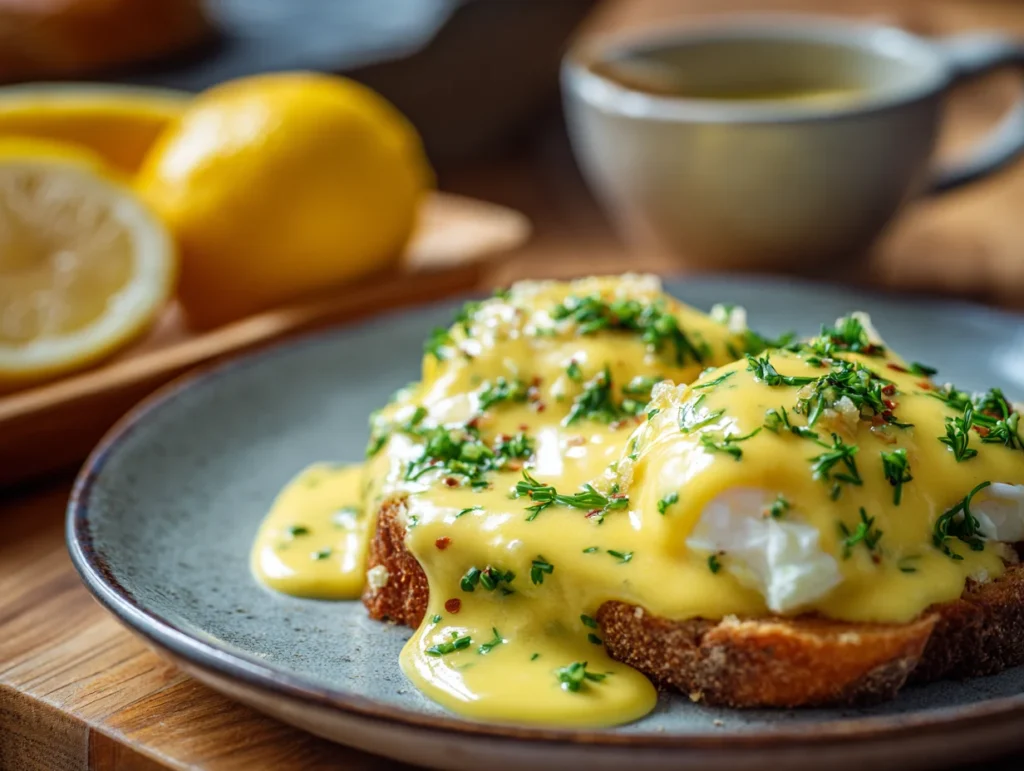
Hollandaise sauce pairs beautifully with many dishes. Drizzle it over poached eggs, steamed asparagus, artichokes, or grilled seafood. It also complements fish dishes perfectly, such as Air Fryer Salmon Bites Recipe, where the rich sauce enhances the natural flavor of the seafood.
For a heartier brunch option, serve Hollandaise over toasted bread and eggs alongside Easy Marry Me Chicken Recipe for a rich and satisfying meal.
Seasonal Relevance
Hollandaise sauce shines year-round, but it becomes especially popular in spring and early summer when fresh asparagus, brunch gatherings, and light seafood dishes take center stage. Its bright lemon flavor pairs perfectly with seasonal vegetables and grilled seafood.
Conclusion
A well-made Hollandaise sauce is a testament to technique, patience, and precision. With just a few ingredients and careful attention to temperature, you can create a sauce that rivals the quality of fine dining restaurants. Once you master this classic French sauce, you’ll find countless ways to use it in everyday cooking and special occasions alike.
If you enjoy classic sauces and rich flavors like this, you might also love the Honey Garlic Butter Sauce Recipe, another simple sauce that adds incredible flavor to seafood, chicken, and vegetables.
How To Make Hollandaise Sauce Recipe
4
servings5
minutes5
minutes180
kcal10
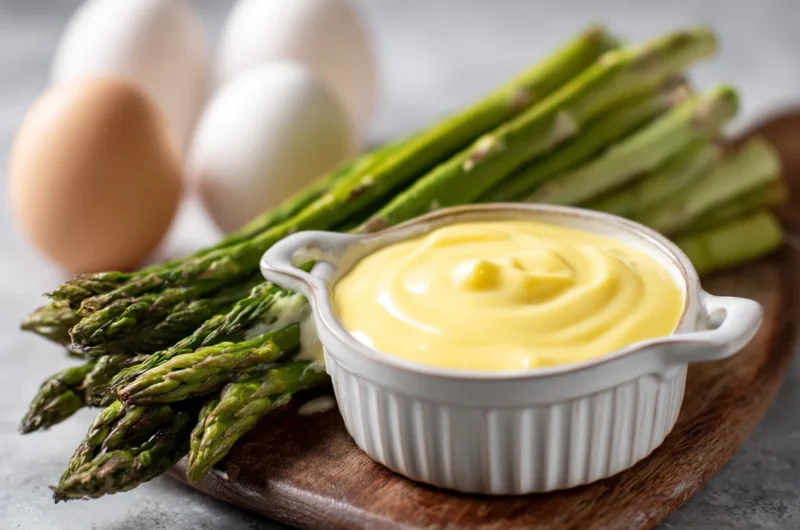
minutesA classic French Hollandaise sauce made with egg yolks, butter, and fresh lemon juice. Rich, silky, and perfectly balanced, this sauce is ideal for eggs Benedict, steamed vegetables, seafood, and elegant brunch dishes.
Ingredients
3 large egg yolks
½ cup unsalted butter, melted and warm
1 tablespoon fresh lemon juice
1 tablespoon cold water
Fine sea salt, to taste
White pepper or a pinch of cayenne (optional)
Directions
- Melt the butter gently over low heat and keep warm without browning.
- In a heatproof bowl, whisk egg yolks, lemon juice, and cold water until smooth.
- Place the bowl over a saucepan of gently simmering water, ensuring the bowl does not touch the water.
- Whisk continuously until the yolk mixture thickens and becomes pale and creamy.
- Remove from heat and slowly drizzle in the warm butter while whisking constantly until emulsified.
- Season with salt and white pepper or cayenne. Adjust thickness with a few drops of warm water if needed.
- Serve immediately while warm.
Recipe Video
Notes
- Serve Hollandaise sauce fresh for best texture and flavor.
- If the sauce thickens too much, whisk in warm water a teaspoon at a time.
- Avoid reheating directly on heat, as the sauce may separate.
Frequently Asked Questions
Q1: Why did my Hollandaise sauce separate?
Hollandaise sauce usually separates when the butter is added too quickly or when the sauce becomes too hot. To fix it, whisk a teaspoon of warm water into the sauce while whisking vigorously.
Q2: Can Hollandaise sauce be made in advance?
Hollandaise is best served immediately. However, it can be kept warm for about an hour in a thermos or warm water bath. Avoid reheating it directly on the stove because the sauce may break.
Q3: What foods pair best with Hollandaise sauce?
Hollandaise pairs well with eggs Benedict, grilled fish, roasted vegetables, asparagus, and potatoes. The rich buttery flavor enhances simple dishes and adds a luxurious finish.